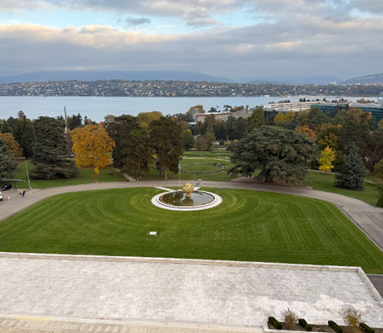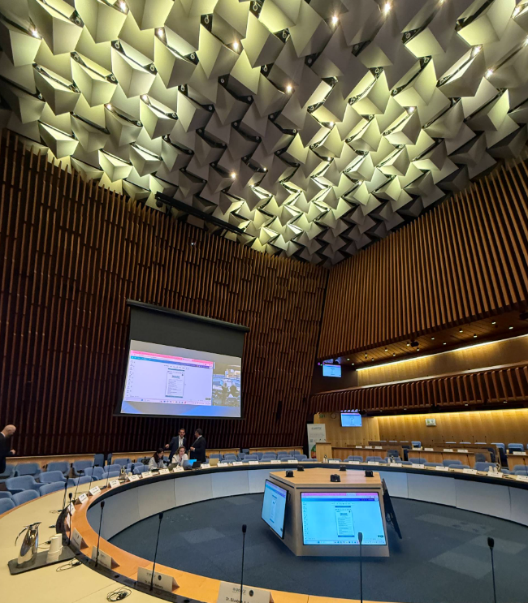
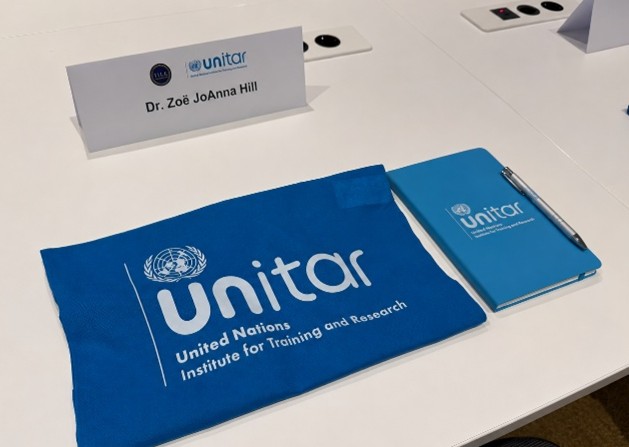
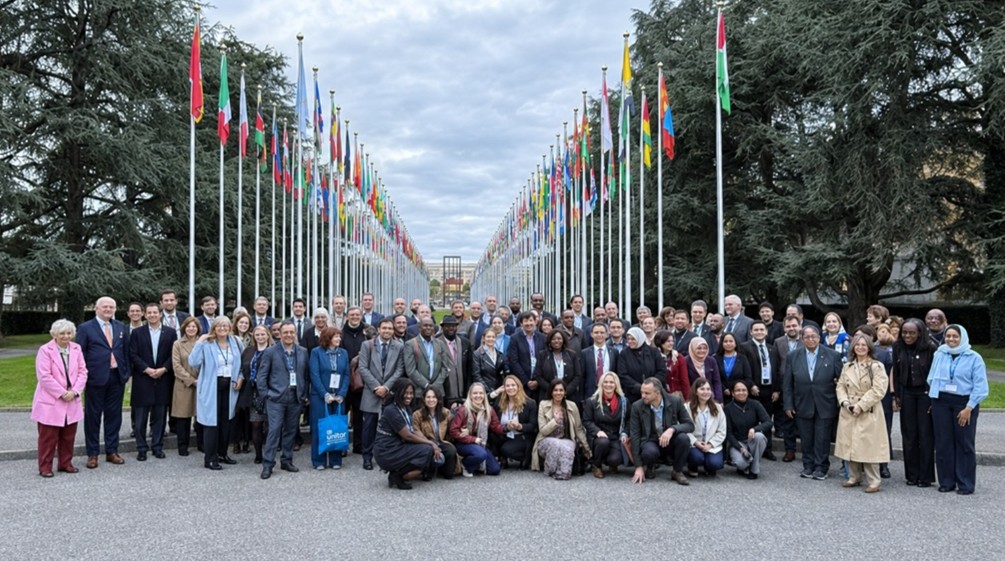
In October, ICHS Vice President of Academics and Provost Dr. Z JoAnna Hill was invited to participate in UNITAR's Academic Leadership Suite program at the World Health Organization in Geneva, Switzerland. Education leaders from around the world came together to explore how colleges and universities can reimagine career readiness and empower students to thrive in a workforce shaped by AI. In this post, Dr. Hill reflects on what she learned in Geneva and what it could mean for the students we serve at ICHS.
Reflections on UNITAR’s Advanced Leadership Studies Program in Geneva, Switzerland
By: Dr. Z. JoAnna Hill, PhD FNP-BC
Some experiences expand your knowledge. Others challenge your perspective. And then there are those rare experiences that fundamentally change how you think about leadership, education, and the responsibility we have to shape the future.
My recent journey to Geneva, Switzerland, for the United Nations Institute for Training and Research (UNITAR) Advanced Leadership Studies program was one of those experiences.
As the plane descended toward Geneva, surrounded by the breathtaking Swiss landscape, I anticipated a week of meaningful discussions and professional connections. What unfolded was something far greater—an opportunity to engage with global leaders, challenge conventional thinking, and reconsider the role of higher education in an increasingly complex world.

The experience began with an opening-night reception, where participants from diverse backgrounds gathered to meet, exchange perspectives, and discuss the week's ambitious agenda. From the beginning, there was a remarkable sense of shared purpose: we had come not simply to learn from one another, but to explore how we could collectively make a difference.
Throughout the week, our discussions challenged us to rethink higher education, artificial intelligence, employability, and the evolving responsibilities of academic institutions. One particularly memorable exercise brought the United Nations' 2030 Agenda and its Sustainable Development Goals (SDGs) to life, illustrating how education, healthcare, economic opportunity, sustainability, and global well-being are fundamentally interconnected.
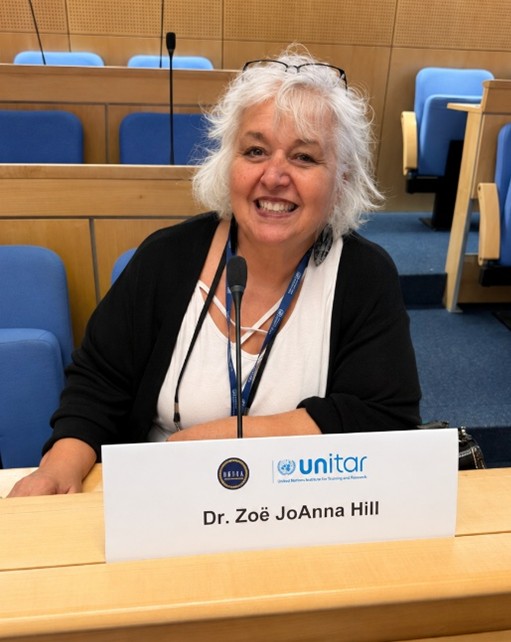
Our visits to the World Health Organization (WHO) were equally meaningful, culminating in a delegate discussion in the WHO Executive Board Room. Sitting in a space where global health priorities are discussed reinforced the importance of dialogue, diplomacy, and collaboration in addressing challenges that transcend borders.
Geneva also offered unforgettable cultural experiences. Dinner at Restaurant Edelweiss introduced us to traditional Swiss fondue, accompanied by wonderful conversation and lots of laughter. Another highlight was a reception at the United Nations, where we witnessed an extraordinary view of Mont Blanc and Lake Geneva—a breathtaking reminder of the beauty of our shared world.
The week's final challenge brought our learning into focus. Working collaboratively, we developed a white paper addressing the central themes of the program, translating diverse perspectives into recommendations for the future of higher education.
My Leadership Takeaway
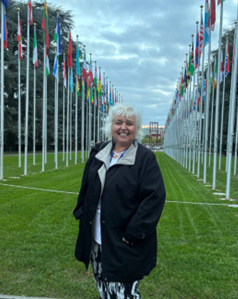 My greatest takeaway was the realization that leadership is not about preserving the institutions we inherited; it is about having the courage to reimagine the institutions the future requires.
As academic leaders, we must look beyond traditional measures of success. Our responsibility is not simply to graduate students, award credentials, or respond to technological change. It is to cultivate critical thinkers, ethical professionals, lifelong learners, and individuals empowered to make meaningful contributions to society.
Artificial intelligence will undoubtedly transform education, but technology alone cannot define our future. Human judgment, compassion, creativity, collaboration, and the willingness to challenge established practices must remain at the heart of our work.
I returned from Geneva inspired, energized, and reminded that meaningful transformation begins when we move beyond asking what is possible and start asking what is our responsibility to make possible?
The future of education is not something we should simply anticipate. It is something we have a responsibility to help create.